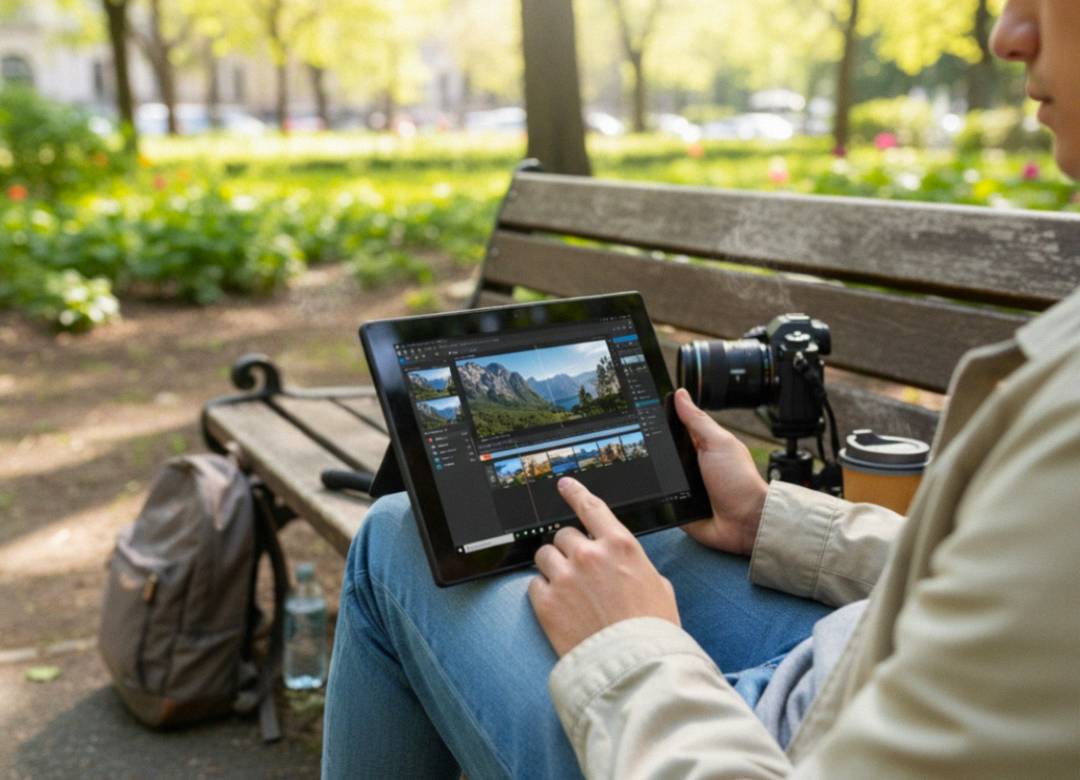



How to Use a Windows Tablet for Video Calls and Streaming (No Lag Setup Guide)
When you’re constantly on the move, problems with streaming or video calls seem to appear out of nowhere. This is for reasons we can’t always control, such as Wi-Fi not being available in certain locations, lighting or weather changes if outside, or just not having a solid stable surface to place the tablet on while streaming.
All of these can lead to things like a choppy video, audio that’s delaying, and lagging while screen sharing. Not good for live streaming or when you’re in the middle of an important call.
This guide is for those who want a repeatable setup for video calls and streaming on a Windows tablet while traveling, working between locations, or hopping on meetings away from a desk.
Full Blog: Windows Tablet Video Calls and Streaming Setup Guide
Start with a Portable Setup You Can Repeat
Having an easy routine when setting up is essential. Too many things like uneven surfaces or weather changes can affect how it's all going to look and sound on your tablet. Utilizing equipment like a flat table or a tablet stand can help stabilize your tablet while you’re live and streaming or on a call.
Another tip is to wipe your tablet’s camera lens before you start just to make sure it’s not dirty. This will just ensure nothing is obscuring the lens and all looks crisp when you go live.
If you’re setting up for a longer stream or call, make sure to keep your tablet plugged into its adaptor for consistent performance while on video. When a tablet’s running low on battery, Windows may reduce power use in the background, and that can sometimes affect how smooth everything feels. Keeping power steady removes one more variable.
Make Audio the Priority
Most people notice audio problems faster than video problems. If your voice is cutting out, echoing, or sounding weirdly far away, it makes the whole call harder to follow. That’s why earbuds or a headset can be a big help when you’re in public spaces or moving between locations.
If you’re not using headphones, try to keep the tablet closer to you in proximity so that the microphone doesn’t have to work as hard to up your voice. Also, busy environments can change quickly. A space that feels quiet can suddenly get loud, so it helps to know where you can move if you need to.
If the call’s important, doing a quick test recording before you join is a simple way to avoid surprises. It doesn’t have to be complicated. You just want to know your volume isn’t too low and your voice doesn’t sound overly echoey.
Connection Choices that Favor Stability
A lot of choppy video and delayed audio comes down to network quality. When you’re traveling, Wi-Fi strength and congestion can change constantly, even within the same building. If the connection feels unstable, moving closer to the access point or switching to a different spot can make a noticeable difference.
If you’re streaming or sharing your screen and everything suddenly starts getting choppy, one of the fastest fixes is to drop the video quality inside the app. It takes some pressure off your connection, and a lot of the time that’s enough to smooth things out. It reduces how much data your connection needs to send, which can help smooth things out on weaker networks.
It also helps to avoid large downloads and uploads while you’re on a call. Even background syncing can compete for bandwidth. If you can pause it until after the meeting, you’re giving the call a better chance of staying stable.
Keep the Tablet Ready Before You Go Live
The worst time to find out something’s wrong is five minutes into a call. That’s why it helps to do a quick reset of your tablet before anything important.
If you’ve had it running all day with multiple apps open, closing what you don’t need can make a noticeable difference. If things still aren’t feeling right and stable after you do that, go ahead and restart your tablet to clear out the background activity.
It’s also worth keeping an eye on storage. Windows uses free space for temporary files, updates, and general system tasks. When your drive is packed, every task can start to feel slower, especially if you’re trying to stream or screen share at the same time. You don’t need to obsess over it, but leaving some breathing room helps your tablet stay responsive when you need it.
Bringing It All Together
If you’re trying to stream or take video calls while traveling, you’re never going to have a perfect setup every time. Some places will have great Wi Fi. Some won’t. Some spots will have nice lighting. Some will make you look like a silhouette. The goal isn’t perfection, it’s having a routine that gives you the best chance of staying stable wherever you land.
That’s also where the Fusion5 Pro N5 fits in nicely. Since it runs Windows 11 Professional, you’re not locked into a limited mobile setup. You can keep your call running while pulling up notes, opening documents, or checking something in a browser without feeling like you’re pushing your luck. The quad core Intel CPU, Intel graphics, SSD storage, and up to 12GB of supported RAM give you the kind of headroom that suits everyday multitasking during calls and streams. Your results will still depend on the network and the apps you’re using, but with a solid setup and a stable connection, the Pro N5 is fully capable of handling video conferencing and streaming while you’re moving between locations.