

Tablet Sustainability: The Smarter Way to Buy in 2026
When people are buying a tablet in 2026, they tend to think about the price, the screen size, and whether it would be capable of managing their workload. Almost nobody is thinking about what happens to it two years from now.
That's the gap within the tablet sustainability conversation, and it really is a big one.
At Fusion5, we build Windows tablets in the USA that are designed to last longer, work harder, and avoid getting tossed in a landfill as long as possible. However, before getting straight into our viewpoint on this issue, let’s be honest about where the industry actually stands.
What Does Tablet Sustainability Really Mean?
While sustainability in the context of tablets may sometimes seem to be about eco-packaging or slapping an eco-badge on a product’s description, it encompasses the full life cycle of the product, starting with extraction of the raw materials used for its production to the end-of-life disposal of the device. However, most of that story remains unknown to the buyer.
All tablets contain lithium (extracted from salt flats in Chile and Argentina), cobalt (often sourced in the Democratic Republic of the Congo), rare earth elements like neodymium and dysprosium, as well as considerable amounts of aluminum and glass. Producing a single tablet requires processing approximately 70 kilograms of raw materials a figure that dwarfs the weight of the finished device itself.
What stings even more to find out is that the manufacturing phase accounts for the majority of the overall carbon footprint of the device. In other words, your best bet on making the sustainable decision regarding a tablet is to use it as long as possible.
Definition: Tablet sustainability is the practice of evaluating and minimizing environmental impacts of a tablet along the way from the manufacturing process to its disposal. Such aspects as choice of manufacturing processes and materials, software support duration, energy consumption, reparability, and e-waste considerations are taken into account.
The Real E-Waste Problem Nobody Talks About
Here's another number that has to be known: 62 million metric tons of e-waste were produced worldwide in 2022. According to the Global E-waste Monitor, less than 22.3% of e-waste was formally recycled, while the rest of it approximately 48 million metric tons was dumped, burned, or processed improperly.
Tablets belong to the group of "Screens and Monitors" and "Small IT Equipment," which is a significant source of annual production of tens of millions of metric tons of e-waste. And the trend is going the wrong direction. Moreover, the projections state that e-waste will amount to reach 82 million metric tons by 2030 under unchanged consumption rates.
Things in the USA are not much different, according to Back Market (2025) research, the average American household owns 21 electronic devices. Nevertheless, only 15% of e-waste in North America is properly collected and recycled (Statista, 2024). Americans claim that they dispose of their devices properly, but the data shows otherwise.
What makes tablets especially tricky when it comes to end-of-life:
- Batteries come glued or sealed in, making it hard to remove without special equipment
- Special composition of the screen that is difficult to dispose of safely due to toxic materials
- Mixed materials metals, glass, and plastic are not able to be recycled in a standard recycling stream
- Lack of information among consumers about where to dispose of the tablets properly
What, then, could be the solution? One has to start with buying a sustainable device.
What Makes a Tablet Truly Sustainable?
Not all "green" claims mean the same thing. Here's a framework that cuts through the marketing.
Hardware Durability
A tablet that physically survives three to five years of regular use doesn't need to be replaced. That's fewer devices manufactured, fewer raw materials extracted, and less e-waste generated. Build quality metal vs. plastic chassis, drop resistance, screen protection directly translates to environmental impact.
A rugged tablet with reinforced housing isn't just tougher for field work. It's a sustainability feature.
Software Longevity
A device is only as long-lasting as its software support. Android tablets often receive two to three years of OS updates before manufacturers move on. Windows 11 tablets, by contrast, can receive security updates and feature patches for a decade or longer under Microsoft's standard support schedule.
That's the difference between a device you replace in 2027 and one you're still productively using in 2031.
Energy Efficiency
Modern processors like the Intel N100 (Intel 13th Gen) are specifically designed for low power consumption without sacrificing performance. Tablets built on efficient chipsets consume less electricity over their lifetime which matters when you multiply millions of devices running for years at a time.
Repairability
Can you replace the battery? Can you add storage? Devices designed with modularity and user-repairability in mind stay out of the waste stream longer. SSD-based storage can be upgraded. User-replaceable components reduce the cost and environmental impact of repairs.
Responsible End-of-Life Options
Does the manufacturer offer a take-back or trade-in program? Are certified e-waste recyclers recommended? These downstream factors matter for where the device ends up.
How Longevity Beats "Green" Marketing Every Time
Here's a principle worth writing down: the greenest device is the one you don't have to replace.
Companies love to highlight recycled packaging, carbon offset programs, and percentage-of-recycled-materials claims. Some of those things matter at the margin. But none of them come close to the environmental impact of simply using a device for five years instead of two.
According to a lifecycle analysis framework published by ResearchGate on tablet devices in blended learning environments, the use phase and manufacturing phase together dominate total environmental impact and manufacturing consistently accounts for the higher share. That means every extra year of use directly reduces your device's per-year carbon contribution.
So when you're evaluating a tablet, the most important environmental question isn't "Is this device marketed as eco-friendly?" It's "How long will this device actually last, and will the manufacturer support it?"
The answer to that question is where Fusion5 comes in.
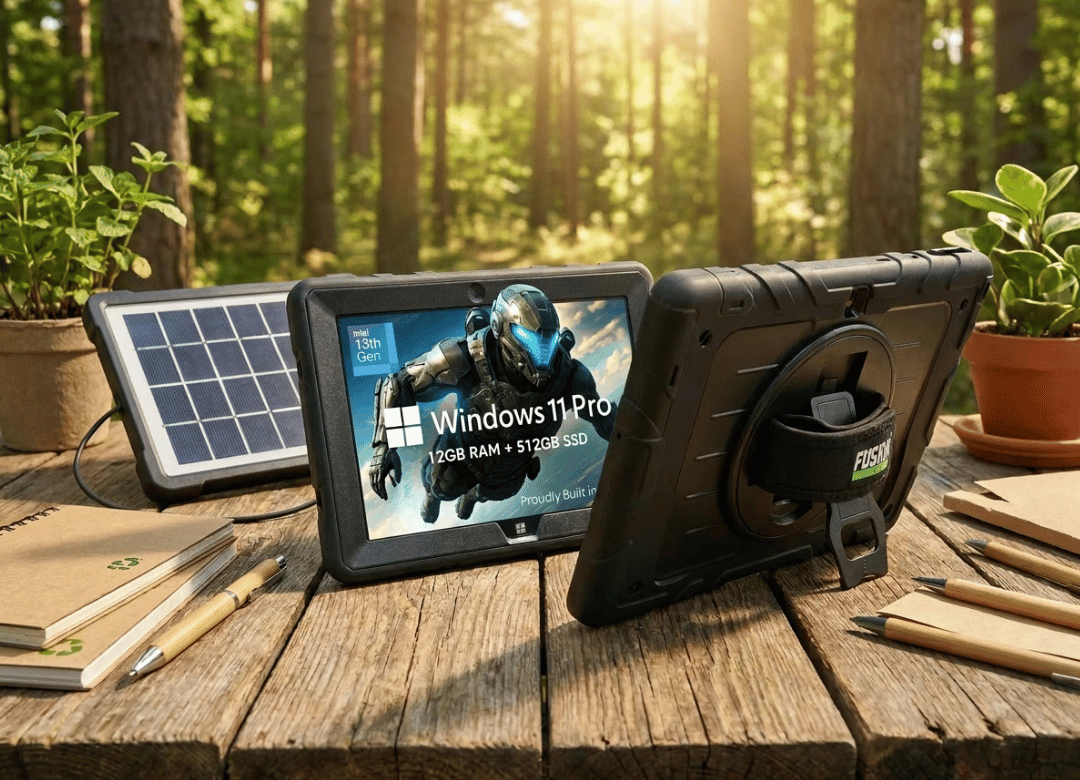
The Fusion5 Rugged Windows 11 Tablet: Built to Last
Here's what that looks like in practice:
Long-Lasting Windows Platform
Windows 11 Pro is supported by Microsoft for the long term. Unlike Android tablets that often face end-of-software-support in two to three years, this device can receive security patches and feature updates well into the next decade. That's not a marketing claim it's Microsoft's published support policy.
Intel N100 Efficiency
The Intel 13th Gen N100 processor is a quad-core chip built on an energy-efficient architecture. It delivers enough performance for productivity, light creative work, and multitasking without the power draw of a high-end chip you'd never fully use. Lower wattage over the life of the device means lower cumulative energy consumption.
Rugged Build for Extended Use
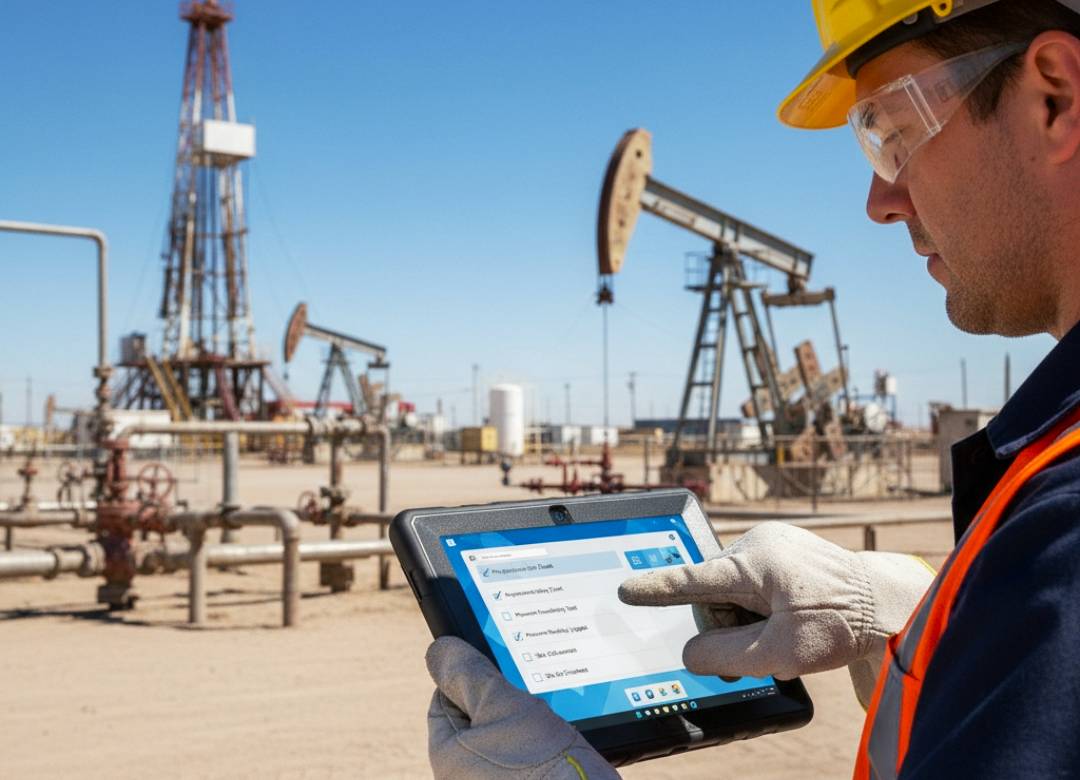
Shockproof and dustproof construction means this tablet survives the kind of real-world handling that kills a standard consumer device in 18 months. If a tablet physically survives longer, it stays out of the waste stream longer. That's not a side benefit it's the core sustainability argument.
512GB SSD Storage
Solid-state storage is more efficient and durable than traditional drives. And 512GB means you're not running out of space in year two and looking for a replacement. The device grows with your needs rather than hitting a wall.
2-Year Warranty with Accidental Damage Coverage
Two accidental damage claims included in the warranty means you're not forced into an early replacement because of a dropped device. That warranty coverage is a direct buffer against unnecessary e-waste.
Price: $639.99 | Available now at fusion5store.com
Want to see the full range? Browse all Windows tablets from Fusion5 or explore all tablets including Android options.
How to Buy a Tablet Sustainably in 2026
If you're trying to make a genuinely sustainable tablet purchase not just a "feels good" one here's what to actually evaluate:
Step 1: Check the software support timeline. Ask how many years of updates the device will receive. Android tablets frequently stop getting updates after 2-3 years. Windows 11 devices typically receive support for much longer.
Step 2: Evaluate build quality honestly. Consumer-grade plastic devices with thin profiles look premium but fail fast. A rugged build even if less visually sleek will outlast it by years.
Step 3: Look at storage and RAM headroom. A device with 4GB RAM in 2026 is already behind. 12GB RAM gives you room to run current and future applications without slowdown forcing an early upgrade.
Step 4: Research the manufacturer's warranty and repair stance. A company that includes accidental damage coverage and provides user guides and a download center is more committed to device longevity than one that offers no post-sale support.
Step 5: Plan end-of-life before you need it. The EPA's eStewards program and certified recyclers like those listed on Earth911.com handle electronics responsibly. Knowing your exit plan before the device dies keeps it out of the landfill.
You can also check out the fusion5 support for answers on device care, and review the Fusion5 warranty terms before purchasing.
What I'd Tell Anyone Shopping Right Now
I've watched a lot of people buy tablets based on price alone and then come back 18 months later frustrated that the device can't handle the apps they need, or that the battery's already degraded to 60% capacity. The cost of that replacement cycle, both financially and environmentally, is something most buyers never add up.
Here's the honest version of the tablet sustainability conversation that doesn't usually get said:
The most sustainable thing you can do is spend a little more on a device built to last. Not on marketing language like "eco-certified" or "made with recycled content." On actual durability, actual software support, and actual hardware headroom.
The Fusion5 Rugged Windows 11 tablet isn't perfect. No device is. But a tablet with a rugged chassis, an Intel chip designed for efficiency, 12GB RAM, 512GB SSD, and Windows 11 Pro running on a decade-long support cycle is, by definition, a more sustainable purchase than a $200 Android tablet you'll replace in two years.
I'd also add this: the brands winning the sustainability conversation in 2026 aren't the ones with the flashiest green credentials. They're the ones that build devices people actually keep using. That's the metric that matters.
Tablet Sustainability Comparison Table
| Factor | Short-Lifecycle Budget Tablet | Fusion5 Rugged Windows 11 Tablet |
|---|---|---|
| OS Support Duration | 2–3 years (typical Android) | 10+ years (Windows 11 Pro) |
| Build Quality | Plastic, consumer-grade | Rugged, shockproof & dustproof |
| RAM | 4–6GB | 12GB DDR |
| Storage | 64–128GB | 512GB SSD |
| Processor Efficiency | Variable | Intel N100 (13th Gen, Low TDP) |
| Warranty / Repair | 1 year, no damage coverage | 2 years + 2 accidental damage claims |
| Expected Useful Life | 2–3 years | 4–6+ years |
| E-Waste Impact | Higher (frequent replacement) | Lower (longer lifecycle) |
| Price | $150–$299 | $639.99 |
The math here is pretty clear. A device that lasts six years instead of two means one purchase instead of three and two fewer tablets in the waste stream.
FAQ: Tablet Sustainability Questions Answered
Q1: What does tablet sustainability mean?
Tablet sustainability refers to minimizing the full environmental impact of a tablet across its entire lifecycle from the raw materials mined to produce it, through the energy it consumes during use, to how it's handled at end-of-life. A sustainable tablet is built to last, consumes energy efficiently, and can be responsibly recycled or refurbished when it reaches the end of its useful life. The single biggest factor is longevity: a device used for five years has roughly half the per-year environmental impact of the same device used for two and a half years.
Q2: How do tablets contribute to e-waste?
Tablets contribute to e-waste when they're discarded often because they became too slow, lost software support, or physically failed. According to the Global E-waste Monitor, the world generated 62 million metric tons of e-waste in 2022, with less than 22.3% formally recycled. Tablets are categorized alongside laptops and screens, a category that generated 6.7 million metric tons of e-waste in that same year. The tablets most likely to end up as waste are those with short software support lifecycles, poor build quality, or low upgrade potential that forces early replacement.
Q3: What should I look for in a sustainable tablet?
Look for five things: (1) a long software support commitment Windows 11 is supported far longer than most Android versions; (2) durable hardware construction, including drop and dust resistance; (3) adequate RAM and storage to avoid performance-driven early replacement; (4) an energy-efficient processor; and (5) a manufacturer with a meaningful warranty that covers accidental damage. Brands that offer repair guides, downloadable drivers, and post-sale support are investing in device longevity, which is the foundation of tablet sustainability.
Q4: Are Windows tablets more sustainable than Android tablets?
In most cases, yes primarily because of software support duration. Microsoft supports Windows 11 for much longer than most Android tablet manufacturers support their OS versions. This means a Windows tablet can remain secure, functional, and up-to-date for significantly longer, extending the useful life of the device and reducing how often it needs to be replaced. Hardware quality varies by manufacturer, but a Windows tablet built on a durable platform with long-term software support has a structurally more sustainable lifecycle than the average Android alternative.
Q5: How does the Fusion5 Rugged Windows 11 Tablet support tablet sustainability?
The Fusion5 Rugged Windows 11 Pro Tablet (10.1", Intel 13th Gen N100, 12GB RAM, 512GB SSD) supports tablet sustainability in several concrete ways: it runs Windows 11 Pro, which has a long-term Microsoft support lifecycle; it's built with rugged, shockproof construction that extends physical device life; its Intel N100 processor is energy-efficient; and it comes with a 2-year warranty including two accidental damage claims, reducing the likelihood of early forced replacement. Built in the USA (Odessa, FL), it's available at $639.99 at fusion5store.com and is designed to remain productive for years, not months.
Final Word
Tablet sustainability in 2026 is a real issue with real consequences 62 million metric tons of e-waste per year kind of real. But the solution isn't complicated. Buy less often. Buy better. And when you do buy, choose a device built for the long haul.
If you're ready to make that call, the Fusion5 Rugged Windows 11 Pro Tablet is a strong starting point. Built in the USA. Backed by a real warranty. Designed to outlast the alternatives.
Shop all Windows tablets at Fusion5 →